The Home Search: Turning Vision Into Action

Part 2 of a 3-Part Series: Buying a Home — A Planning Framework for One of Life’s Most Personal Decisions
In the early weeks, before we’d brought a real agent into the process, my wife, Stephanie, and I wandered through a few open houses on our own, just to get a feel for what was out there. A few of them were priced above the range we’d previously discussed. We walked through politely, but we weren’t both emotionally there.
Looking back, that was useful information, even if it didn’t feel like it at the time. It told us we hadn’t fully finished a conversation we thought we’d already had.
Before the search could move forward in earnest, we needed a team worthy of the vision we’d built in Part 1. And we needed to sit down, on purpose, and finish that conversation properly.
The Brief That Changed Everything
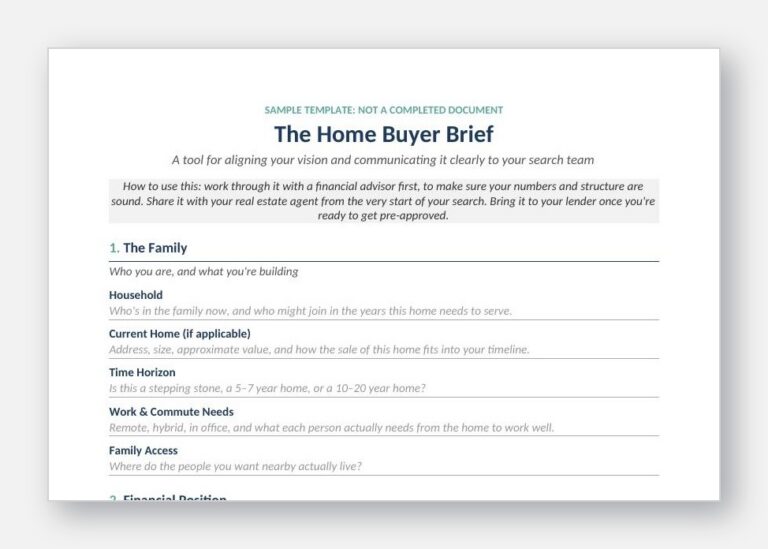
Before we interviewed a single agent, I took our individual Home Clarity Worksheets, the ones we’d each completed separately, and combined them into a single, shared buyer brief.
Not a wish list. A working document. It captured our family situation, our priorities, our floor plan requirements, our neighborhood criteria, our deal breakers, our timeline, and what success actually looked like for us. It named the kinds of listings we wanted to see and, just as importantly, the kinds we didn’t.
We shared it with every real estate professional we considered working with, before the first conversation.
Carmen Ceja, the agent we ultimately chose, told us later that she’d never had a client arrive with their own version of the intake questionnaire she uses with every new buyer. “Having your brief ready before we met helped me get to know your family’s needs faster,” she said, “which allowed us to hone in on the search criteria with much more ease.”
The point of the brief was never to impress anyone, though it did. The point was internal. It forced Stephanie and me to actually agree on what we were looking for before we asked anyone else to help us find it. Everyone who came into the process after that understood us from day one, because we understood ourselves first.
“Everyone who came into the process after that understood us from day one, because we understood ourselves first.”
Building the Right Team
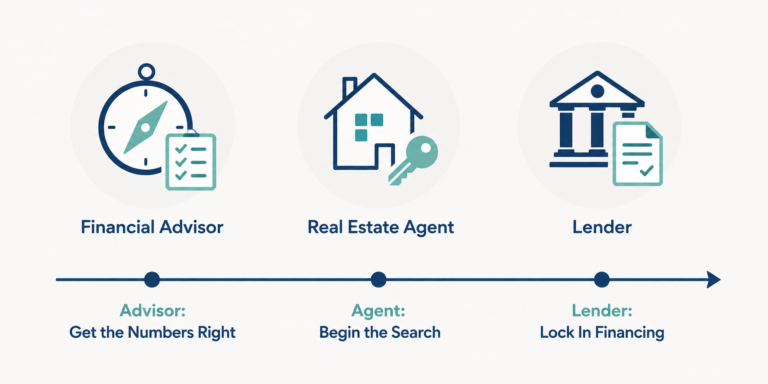
We received four agent referrals: three through Joe Soto, our longtime lender, and one through family. Each got an introductory call and a copy of the brief. Three of those conversations happened by phone or video. Carmen was the one we met in person.
We weren’t looking for the most polished pitch. We were looking for someone who’d actually read what we sent and engaged with it honestly.
Carmen came to our house for that meeting, not a listing presentation. She asked questions that deepened our own thinking rather than steering us toward hers. When we asked directly whether our requirements were realistic for our budget and neighborhoods, she didn’t hedge. “You were a lot more prepared than you may have thought,” she told us. “It was really just a matter of beginning a guided home search from there.” She predicted we’d have an offer out within a few weeks.
She was right.
That same instinct carried through to the offer itself. Writing an offer well means translating clarity into strategy: how aggressive to be, what terms make you a compelling buyer without overextending, how to read a seller’s motivation. That’s not something we figured out on our own. It’s part of what a good agent actually does. Carmen walked us through the tradeoffs plainly, and by the time we were ready to write the offer, it didn’t feel like guesswork. It felt like the next logical step in a process we already trusted.
Joe brought a different kind of continuity. Ours was a relationship spanning my first home purchase, a refinance, and years of collaboration on client home loans. He knew our financial picture before the search began, which meant the eventual financing conversation was less about discovery and more about execution.
There’s a third seat at that table, though it’s easy to overlook when you’re the one filling it. A financial advisor’s job in this process isn’t to replace the agent or the lender. It’s to make sure the numbers and the structure are sound before either of them gets involved, so that by the time you’re pre-approved and touring homes, you’re operating from clarity instead of guesswork.
The pattern here isn’t specific to real estate. It’s true of any major financial decision: the right professionals don’t just make a process smoother. They make better outcomes possible, because they understand what you’re actually trying to build, not just what you’re trying to buy.
“The right professionals don’t just make a process smoother. They make better outcomes possible.”
The Financial Conversation We Hadn’t Finished
We scheduled time to sit down and go through our finances properly, at a moment when we were both rested and ready for it, not squeezed in after a long day or in the middle of house hunting fatigue.
I walked Stephanie through the same process I use with clients: full net worth, income, and a realistic range for what we could spend. Not because she lacked access to the numbers. She’s relied on me to hold that role in our marriage, the way many couples divide financial attention unevenly without it being about trust. It’s usually just about who’s been staring at the spreadsheet. But holding a range in your head and seeing the full picture laid out are two different experiences, and we needed to go through the second one together if we were going to make this decision as a team.
What became clear in that conversation was that the disagreement, to the extent there was one, was never really about affordability. It was about identity.
Buying a home at a certain price point, Stephanie told me afterward, “tapped into my identity more than I thought it would.” Not because the number was reckless, but because it raised a question she hadn’t spent much time sitting with. What kind of life were we signaling we wanted? What did that mean about who we were becoming?
That’s not a spreadsheet question. No amount of math resolves it on its own. It resolves through time, and through talking, and through the slow work of separating what a house costs from what it represents.
Stephanie also had a genuinely honest question that I hadn’t fully answered before: she knew, generally, that buying and holding a home for only a few years usually wasn’t the financially smart move, but she didn’t know why. So we went through the math together: transaction costs on both ends of a sale, and how mortgage amortization front-loads interest over principal in the early years. Once she could see the mechanics, the reasoning clicked. Her response was fair: “There’s a big difference between a few years and forever.” She was right to draw that line. What we landed on wasn’t really “forever” so much as “long enough that the fees stop mattering.” Once that distinction was clear, the 10-to-20-year framing felt less like a cage and more like a decision we were actually ready to make.
One more piece of the financial picture is worth naming plainly. Buying a home is the floor of what you’ll spend, not the ceiling. What mattered most, once we were on the other side of it, was having breathing room built in from the start, not just for the down payment, but for the costs that show up after, the ones nobody budgets for because they’re hard to picture in advance.
The Search Itself
We toured roughly a dozen homes across Orange, Fullerton, and North Tustin over several weeks.
This wasn’t something we did on weekends alone. We built the search into the rhythm of our week: a neighborhood drive-by squeezed between errands, a scheduled tour with Carmen on a Saturday morning, an opportunistic detour past a new listing with our son asleep in the backseat. There were very few days that didn’t involve the search in some form. We treated it as a priority worth protecting, not a project to get through.
After each outing, Stephanie and I sat down together and wrote detailed notes, specific, honest, house-by-house, and sent them to Carmen by email. Not a text. Not a verbal recap the next day. A written record that forced us to say clearly what we’d only felt vaguely while walking through a stranger’s kitchen.
One house had everything on paper: the square footage, the lot size, the outdoor space, the room count. But we kept coming back to the parking. Visitors, especially our mothers, would struggle with it. And the street, for all its charm, felt a little removed from the rest of the neighborhood, a little less warm than the others we’d walked. Small details. They ended up mattering more than anything on the listing sheet.
That’s what the written notes gave us that a mental impression couldn’t: a record we could return to, compare, and learn from. We started to see our own patterns. We consistently valued established character, one-story living, and a floor plan we could move into without reimagining it first. We consistently passed on homes that needed serious renovation, not because we couldn’t manage the work, but because we didn’t want to spend the next several years managing it.
Some houses we knew within minutes weren’t right. A few required real conversation. That’s where the learning lived.
What We’re Glad Didn’t Happen
There was a house we almost bought.
The neighborhood was exactly what we’d been drawn to all along, established, green, full of character. The lot gave us room to grow into. Stephanie was taken with its potential from the first walkthrough, and we went back more than once trying to see our life inside it.
We made an offer. Then a higher one, after a round of counters.
We never heard back. The seller went silent. Months later, the house was still unsold. Eventually it came off the market entirely.
At the time, the silence was frustrating. Looking back now, we’re genuinely relieved it didn’t work out. The home had real potential, but we’d been talking ourselves into the renovation more than we’d been genuinely wanting it. Walking through updated homes in the following weeks made the gap obvious in a way no amount of imagining had.
There’s no perfect house, and there will always be another one. The right home shows up for you at the right time, not perfect, but workable for both of you, and worth the compromises it asks for.
Recognizing the Right Home
We found it on a street lined with old growth trees, in a neighborhood that felt exactly the way charm had come to be defined for us, earned rather than staged.
Within minutes of walking inside, I carried our son into a corner room and sat him on the window ledge. He beamed. It felt right immediately, in a way that didn’t require discussion. That room is his now.
The floor plan worked without requiring a mental renovation. There was room to grow, room to work, and room to have people over. We didn’t have to talk each other into anything. We could already see our life happening there.
We moved quickly. We wanted to lock in the home before more open houses gave other buyers the same idea, so we made an offer slightly below asking with terms designed to make the decision easy for the seller. They countered. We met in the middle.
The search we thought might take three months took one.
“We didn’t have to talk each other into anything. We could already see our life happening there.”
What Actually Moved Us From Vision to Offer
Looking back, four things did the real work of turning our Part 1 clarity into an accepted offer.
We put our vision on paper before we asked anyone for help. The buyer brief meant every professional understood us before the first real conversation.
We chose our team for alignment, not convenience. Four referrals, one real fit, found by asking who actually engaged with what we’d sent rather than who pitched the hardest.
We finished the financial conversation, all of it. Not just the number we could afford, but what that number meant to each of us, and why the math favored a longer commitment.
We built a habit of learning from every house, not just reacting to it. Written notes after every showing turned vague impressions into a pattern we could actually use.
None of these took special expertise. They took discipline, applied consistently, over a search that could easily have felt chaotic without it.
What Carried Us Through
The stress of a home search is often treated as inevitable. In our experience, it was proportional to how prepared we were. The uncertainty was real, but shorter, because we had a framework to return to when things got hard.
What carried us through wasn’t avoiding the hard moments. It was staying persistent, week after week, and remembering we were on the same team, taking turns being the one who needed steadying.
That, as much as the buyer brief or the financial framework, was the real infrastructure behind this search.
Start Building Your Team
If you’re preparing for a search, start with a brief, honest and specific, even if it’s not formal. Share it before the first meeting with any agent or lender you’re considering. And have the financial conversation fully, not just the numbers, but what those numbers mean to each of you, before you’re standing in a kitchen you’ve already started to love.
To make that easier, we’ve put together a sample Home Buyer Brief template, structured the same way ours was: your family situation, your financial position, your must-haves and hard avoids, your floor plan priorities, your target neighborhoods, and clear direction for your agent. It’s designed to be filled in with a financial advisor first, shared with your agent from day one, and brought to your lender once you’re ready to move forward.
In Part 3, we’ll cover what happens after the offer is accepted: escrow, inspections, negotiation, and the transition from buyer to homeowner.
Next: Part 3 — From Offer to Ownership. Navigating escrow, inspections, and the transition to life in a new home.
Disclaimer: This article is for general informational purposes only and is not intended to provide, and should not be relied on for, legal, tax, or accounting advice. Please consult a qualified estate planning attorney or tax advisor regarding your individual circumstances.
Derek Pantele, CFP®, CFA is the founder of Affinity Financial, a wealth advisory firm based in Orange, CA. He works with professionals and families navigating major financial decisions, including equity compensation, liquidity events, and long-term wealth planning.
Are you overpaying taxes?
Take the 2-minute quiz to find out.
EXPLORE TOPICS


Start Your Next Chapter and Pursue Exciting Financial Goals
Click below and schedule a complimentary consultation
Similar Posts


Before You Search: Defining What Home Means to You
September 29, 2026


When Your Company Goes Public, Start Here
June 18, 2026

Open Enrollment 2026: A Practical, Tax-Savvy Guide to Maximizing Your Employer Benefits
October 15, 2025
No results found.